
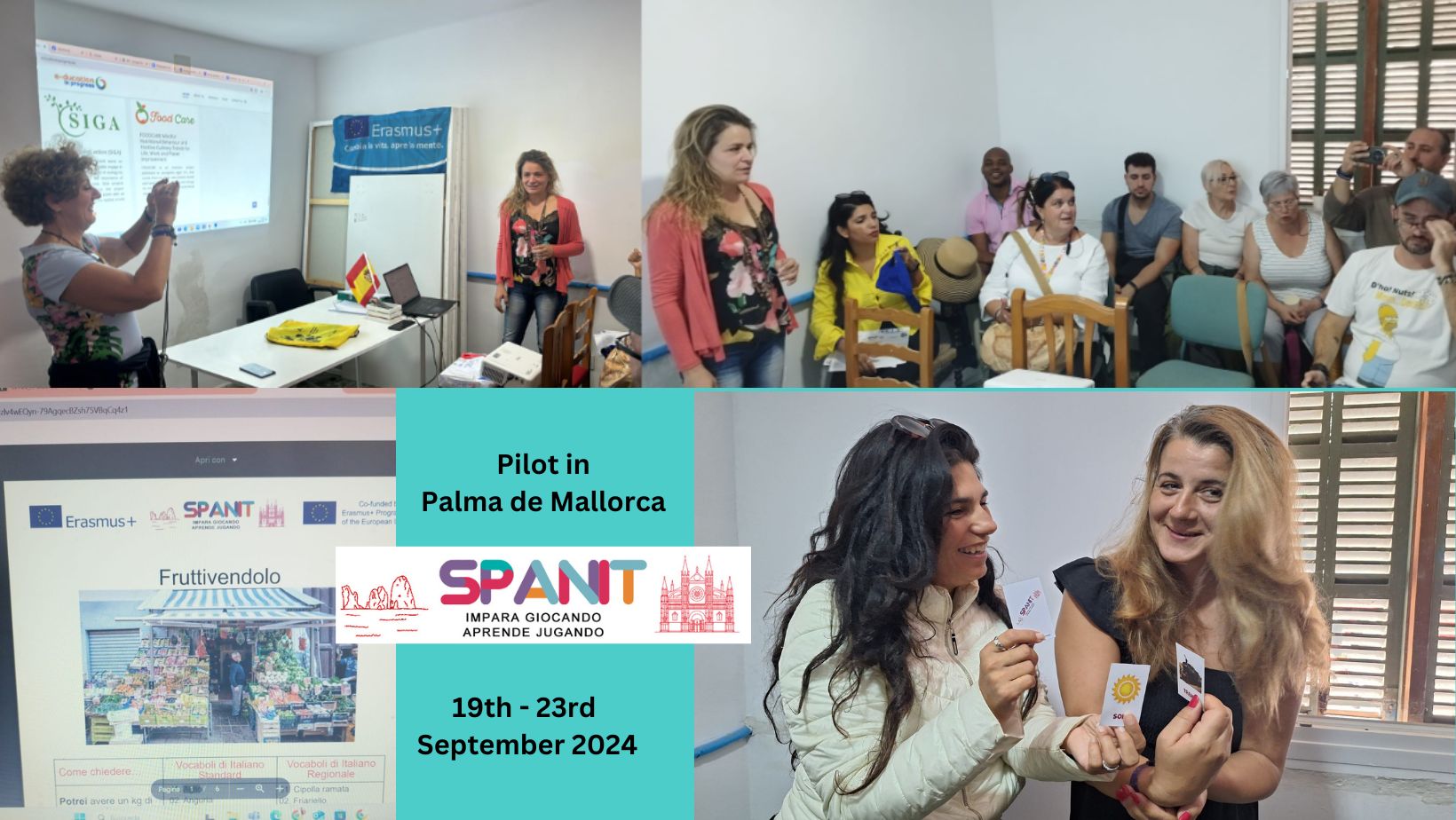
The piloting phase of the SPANIT Linguistic Toolkit in Palma de Mallorca marked a significant step in enhancing language acquisition for adult learners in the tourism sector.
With 17 participants engaged in the program, the pilot course focused on equipping learners with practical Spanish and Italian language skills tailored for real-life professional settings in the hospitality and tourism industries.
Palma de Mallorca, a vibrant and multicultural tourist destination, provided an ideal environment for testing the effectiveness of the SPANIT Toolkit. The course was designed to simulate real-world scenarios, such as interacting with customers, working in restaurants, and assisting travelers in various service roles. The use of large posters depicting local businesses and interactive flashcards with vocabulary and cultural insights enabled participants to engage with the language in a dynamic and meaningful way.
Participants practiced essential phrases and dialogues through role-playing exercises that mirrored everyday workplace situations. This hands-on methodology not only improved linguistic competence but also boosted learners' confidence in using the language in professional environments. Gamification elements, including challenge-based learning and collaborative activities, further enhanced motivation and retention.
Learners and instructors provided valuable feedback on the toolkit’s usability and effectiveness. Key takeaways included:
-
Improved Communication Skills: Participants reported increased fluency and confidence in handling customer interactions.
-
Cultural Awareness: Comparing Spanish and Italian languages helped learners develop a deeper understanding of both cultures, strengthening their adaptability in a diverse work environment.
-
Real-World Application: The toolkit’s focus on industry-specific terminology made it highly relevant for tourism professionals.
Following the success of the pilot in Palma, further refinements will be made to the toolkit based on participant feedback. The next steps include expanding the toolkit’s content, integrating additional business scenarios, and implementing the final version in broader educational and vocational settings.
The SPANIT pilot in Palma de Mallorca has demonstrated the effectiveness of experiential language learning, paving the way for greater accessibility and practical application of language skills in tourism-driven economies. The initiative will continue to support migrants and professionals in developing the linguistic and cultural competencies needed for career advancement in the hospitality sector.